The meeting of Grace Christian Church. We meet in person and stream services every Sunday at 10:30 AM EST in Manalapan, New Jersey.
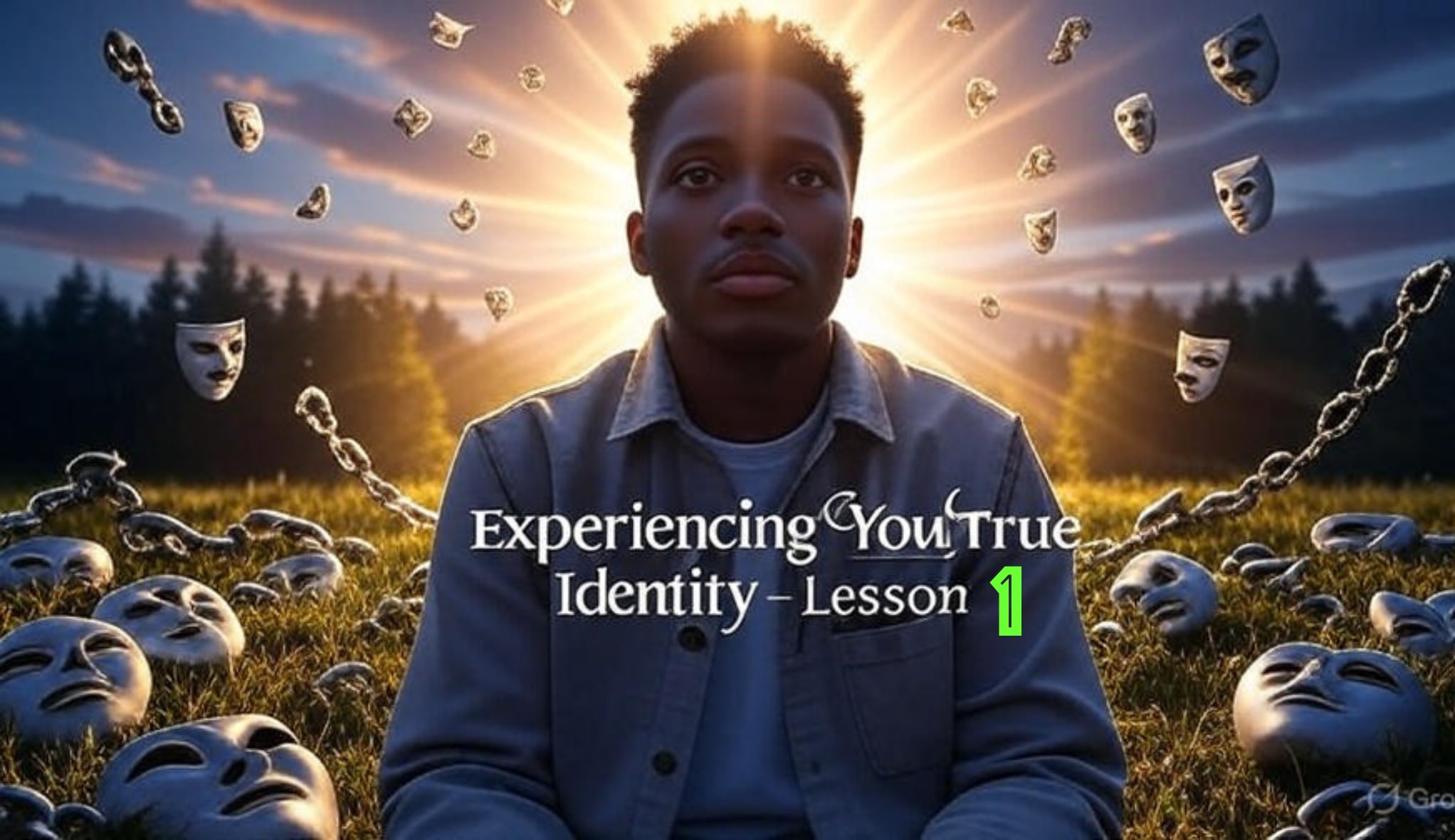
Experiencing Your True Identity - Lesson One
Is What You Believe About Yourself The Truth?
DAY ONE
Introduction
In this lesson we will be looking at the following topics:
- Defining the term identity
- How our false beliefs were formed
- Our positive and negative false beliefs
- How living from your flesh produces fleshly behaviors
- Fleshly attitudes that result from false beliefs
- The outcome of your fleshly attitudes and false beliefs
Defining Identity
You may be asking at this point: What do you mean by “identity?” It is defined this way.
YOUR IDENTITY:
How you FEEL or what you BELIEVE about yourself.
This definition leads to two questions:
- What is it you believe about yourself?
- Is what you believe the truth?
Would you agree with this statement?
You will not live beyond what you BELIEVE and
if what you believe is a FALSE BELIEF, then that is how you will live.
How Our FALSE Beliefs About Ourselves Were Formed
“As a man thinks in his heart, so is he.”
Proverbs 23:7
From birth you started receiving messages about yourself, God, others, and living life. For the
sake of this study, we will focus on the messages you may have heard about yourself. The
messages usually came in two categories, positive and negative. For example:
Negative messages might have been: “You are a failure.” “You will never measure up.” “Is
this the best that you can do?” “I don’t love you.”
Positive messages might have been: “I am proud of you.” “You can do it.” “There is nothing
you can’t accomplish.” “You are special.”
Exercise: Go to the diagram on page 22 of this lesson and ask God to bring to mind some of the
positive or negative messages that you have heard about yourself from your parents, siblings,
relatives, friends, or teachers. Write those messages down in the blocks at the top of the page.
Question: In what ways do you believe the messages you have listed, positively or negatively,
impact how you feel or what you believe about yourself?
Meditate: Read Proverbs 23:7 from the previous page and ask the Lord to reveal to you how what
you believe about yourself impacts every area of your life.
All Our Messages Were Interpreted Through Adam’s DNA
According to Romans 5:12, we were all born “in Adam.”
“Therefore, just as through one man [Adam] sin entered into the world, and death
through sin, and so death spread to all men, because all sinned.”
Being born “in Adam” means that we inherited Adam’s fallen DNA. Following is a diagram
illustrating examples of Adam’s DNA.
We see from the diagram examples of Adam’s DNA which include shame, guilt, inadequacy,
etc. From the time you were born until you were saved, you had no choice but to interpret life
through the filter of your Adamic DNA. When a negative message such as “you are a failure” is
interpreted through your Adamic DNA, it can lead to false beliefs as we will discuss in the next
section. Think about this. Even if you received positive messages from parents, teachers, and
others, you still interpreted these messages through your Adamic DNA.
DAY TWO
Repeated Messages Lead To FALSE Beliefs About Yourself
As messages you received were repeated and interpreted through your Adamic DNA enough
times, you started forming false beliefs concerning yourself around those messages. A false belief
is defined as follows.
ANY belief about yourself that does NOT line up with
or CONTRADICTS God’s TRUTH.
There are two types of false beliefs: positive and negative.
NEGATIVE and POSITIVE False Beliefs
Exercise: Before you go any further in the study, look at the following list and choose which
characteristics that you feel or believe are true of you. (It is important to be honest with yourself
as you go through this list.) You might consider asking the Holy Spirit to reveal to you what you
believe from this list. Go to the diagram on page 22 and write down your beliefs inside the circle.
I believe or I feel that I am:
Unworthy
Secure in self
Unacceptable
Self-confident
Rejected
Self-sufficient
Rejected
Self-sufficient
A failure
Successful in self
Anxious
Self-reliant
Inadequate
Self in control
Weak
Resourceful in self
Defeated
Competent in self
Insecure
Fearless in self
Fearful
Strong in self
How NEGATIVE False Beliefs Are Formed
Every one of the beliefs listed above are false beliefs. The beliefs on the left side are
NEGATIVE false beliefs. Repeated negative messages lead to negative false beliefs. For example,
if you have heard repeated messages that you are unworthy, if you continue to take ownership of
those messages, you will eventually come to believe you are an unworthy person as the diagram
on the following page illustrates.
How POSITIVE False Beliefs Are Formed
The column on the right is a list of POSITIVE false beliefs. The positive false beliefs look
appealing, but how do we know they are false beliefs? The key word is “self.” Anything that you
believe about yourself that has “self” attached to it is a false belief.
Below is an illustration about how positive false beliefs can be formed as we continue taking
ownership of positive messages. For example, the repeated positive message of, “there is nothing
you can’t do” eventually leads to a positive false belief that “I am a self-confident person.”
If you picked one or more of the false beliefs from the list as being true of you, then you are
still believing false beliefs about yourself. It is important to know your false beliefs because of
how God dealt with those false beliefs as we will discuss in Lesson Three. Before we go to the next
section, please do the following exercise.
Exercise: One way of helping you understand that the two lists above are false beliefs is to add
the word “Christian” after each one – for example, “I am a rejected Christian” or “I am a self-
reliant Christian.”
I am a__________________________ Christian.
I am a__________________________ Christian.
I am a__________________________ Christian.
I am a__________________________ Christian.
I am a__________________________ Christian.
Isn’t it easy to spot that neither one of these false beliefs line up with the truth? We will explore
this in greater depth in Lesson Three.
Are You Wearing A Mask?
Here is a key truth concerning our identity.
Our tendency is to try and MASK our NEGATIVE false beliefs
with POSITIVE false beliefs.
Since we all struggle on some level believing we are inadequate, unworthy, or insecure, we
tend to put on masks of positive false beliefs so that people will see in us what we want them to
see.
For example, if I believe I am inadequate, I might put on a mask of self-confidence so that
people will see the mask versus seeing my inadequacy.
The key point is that if we don’t know the truth of our true identity, we keep covering up our
false beliefs with more false beliefs/masks.
What Happened As Your False Beliefs Were REINFORCED?
“Then we will no longer be like children, forever changing our minds about what we believe
because someone has told us something different or because someone has cleverly lied to us
and made the lie sound like the truth.” Ephesians 4:14
In addition to forming false beliefs, a further problem develops. If we continue to believe these
false beliefs, they become reinforced to a point where they become the truth to us. This presents
a serious problem.
The Problem:
Some of our false beliefs become so TRUE to us and so ENTRENCHED,
that even when GOD’S TRUTH EXPOSES our false beliefs,
we STILL believe our false beliefs.
We will see this point very clearly in Lesson Three when we learn about the characteristics of
our true identity. The key point being, the longer we continue to believe our false beliefs, the more
entrenched they become and the more resistant we become to God’s truth.
ADVERSE Effects of Living From Your False Beliefs
There are primarily two adverse effects from living from your false beliefs.
Adverse Effect #1 – The Flesh
We saw earlier in this study that you will not live beyond what you believe. If what you believe
is false, that is how you will live. There are adverse effects of continuing to live from your false
beliefs which are negatively impacting you, your relationship with God, and your relationship with
others. Another name for the adverse effects of our false beliefs is called living from the “flesh.”
“For we know that the Law is spiritual; but I am of flesh, sold into bondage to sin.”
Romans 7:14
As a reminder from Book One, let’s look again at the definition of the flesh.
The biblical meaning of the word “flesh” is man’s DESIRE to live life with
HIMSELF as the source, INDEPENDENT or APART from God as the Source.
Some key truths about the flesh:
• The flesh is not going away. It will be with us for the rest of our lives.
• The flesh cannot be changed or improved. (It can get worse!)
• The focus of the Christian life is NOT for you to manage, subdue, or defeat the flesh
independent of God.
• Your willpower is not great enough to have consistent victory over your flesh.
We will struggle the rest of our life with the flesh. The bad news is that going back to our
fleshly, independent living is the “default” position for all of us. In other words, it easy to go
back to the flesh because that is what we are used to doing. However, now that we are Christians,
we have another option. Since we have the fullness of God’s power in us, we can now choose to
walk dependently on God’s power (which ALWAYS overpowers the flesh).
DAY THREE
Adverse Effect #2 – Fleshly Attitudes and Behaviors
From the FLESH flow sinful ATTITUDES and BEHAVIORS that
result from the FALSE beliefs we have about ourselves.
“Now the works of the flesh are obvious: fornication, impurity, licentiousness, idolatry,
sorcery, enmities, strife, jealousy, anger, quarrels, dissensions, factions, envy,
drunkenness, carousing, and things like these….” Galatians 5:19-21a
Living from your false beliefs about yourself will result in fleshly attitudes or fleshly
behaviors like those listed in Galatians 5:19-21 above. Fleshly behaviors and attitudes come in
two forms, positive flesh and negative flesh. Below are some examples of negative and positive
flesh.
NEGATIVE Flesh:
Negative flesh is easy to spot because it produces negative fleshly behaviors or attitudes. Look
at the following examples to better understand what that looks like.
Examples of negative flesh: anger, manipulation, unforgiveness, envy, controlling, critical, and
judgmental
The following is an example of a false belief and the negative fleshly behavior that results.
Example: Let’s assume one of your false beliefs is that you are inadequate. What inadequate
people want is to not feel inadequate. So, they manifest fleshly behavior such as being critical and
judgmental of others to make themselves feel good about themselves. They can become people-
pleasers to a point where they will do whatever it takes to be well thought of. Finally, if they can’t
shake the feelings of inadequacy, they might try to escape those feelings through such fleshly
coping mechanisms as their job, hobbies, alcohol, pornography, etc.
POSITIVE Flesh:
Positive flesh is more difficult to recognize because it looks very appealing. The problem is
that positive flesh is flesh that looks good, but is either done with the focus on yourself or is done
independent of God. Let me show you examples of both:
- Examples of positive flesh that focus on SELF: self-confidence, self-reliance, self-sufficiency,
success, self-righteousness
The following is an example of a false belief and the positive fleshly behavior that results.
Example: Let’s assume that one of your false beliefs is that you are self-confident. The thrust of
self-confidence is to do whatever it takes to bolster that self-confidence. Some of the fleshly
behaviors that flow from self-confidence are boasting and feeling like you have all the answers
(know-it-all). Self-confident people tend to be prideful in their accomplishments and look down
on or take advantage of those that don’t measure up to their standards.
- Examples of positive flesh that are done INDEPENDENT OF GOD:
- Trying to do your job independent of God
- Trying to be a godly husband, father, wife, or mother independent of God
- Sharing the gospel with others independent of God
- Discipling someone independent of God
- Going to church, giving to the church, or being involved in ministry to earn something
from God
Positive flesh is a result of TRYING to do certain things independent of God.
They may APPEAR very spiritual or good, but if they are done
independent of God, this is still the FLESH!
Example of a man who was living from positive flesh independent of God: There was a man
who entered the ministry and shared that he developed what he called “ministry” flesh. It was a
very good-looking form of flesh, but it was still flesh. For example, there were times when he
stood up to speak and felt totally prepared because he had his notes and his power point slides.
Instead of depending on God to speak through him, he taught in his own strength and ability,
independent of God’s life and power. Even though truth was taught, he was teaching with a fleshly
attitude because he taught the truth independent of God.
Let’s look at more of the fleshly attitudes and behaviors associated with your negative or
positive false beliefs. From the two lists that follow, see if you can identify with any of the fleshly
behaviors.
Fleshly Attitudes and Behaviors Associated With NEGATIVE False
Beliefs
Below is a list of negative false beliefs that you may remember from the exercise that you
completed concerning your beliefs. The false belief is underlined. Following the false belief are
some possible fleshly attitudes/behaviors that may flow from that belief.
- Unworthy: overly introspective, self-condemning, being critical of others to build yourself
up - Unacceptable: jealousy, envy, being a people pleaser
- Rejected: angry, become defensive, reject others
- A Failure: fear of making mistakes, become introspective, being envious of others’ successes,
becoming a loner - Inadequate: critical and judgmental of others, denial, people-pleaser, escape through such
things as your job, hobbies, alcohol, pornography, etc. - Fear: isolate yourself, self-protection, avoid failure at all costs
- Insecure: depression, stay in control, obsessed with accomplishments
- Defeated: self-pity, pessimistic, depressed
Question: Do any of these fleshly behaviors apply to you?
DAY FOUR
Fleshly Attitudes and Behaviors Associated With POSITIVE False Beliefs
Below is a list of positive false beliefs and some examples of the fleshly attitudes and behaviors
that may flow from those beliefs.
- Secure in self: focus on material things, take pride in your intellect or looks, being critical of
others - Self-confident: narcissistic, boasting, self-serving
- Self-sufficient: driven by performance, controlling, boastful
- Successful in self: dictatorial, demanding, manipulation of others
- Self-reliant: loner, demanding of others, selfish
- Self in control: perfectionist, not tolerant of others, do whatever it takes to stay in control
- Competent in self: argumentative, stubborn, intimidating
- Strong in self: controlling, domineering, little or no toleration for weakness
Question: Do any of these fleshly behaviors apply to you?
What is the result if we continue living from our false beliefs?
Continuing to live from false beliefs about yourself will keep you in
BONDAGE to your fleshly attitudes and behaviors.
Exercise: Please refer to the previous page and pages 20 and 21 of this lesson entitled “Fleshly
Behaviors” and write below five fleshly behaviors that you want to be set free from.
Take your five fleshly behaviors from the exercise above and enter them on the lines at the bottom
of page 22. As you look at the diagram on page 22, you can now get a better idea of how your
messages form your false beliefs and the fleshly behaviors that flow from those beliefs.
Question: In what ways might your fleshly behaviors be negatively impacting your spouse, your
kids, your friends, or your co-workers? For example: “My false belief of rejection is causing me
to reject my co-workers.”
What Is The Outcome of Your Fleshly Attitudes and Behaviors?
“For the mind set on the flesh is death, but the mind set on the Spirit is life and peace.”
Romans 8:6
This verse says that continuing to live from your flesh leads to death! What kind of death is
referred to in Romans 8:6? It is not spiritual death because we know that as a result of trusting
Christ for salvation, we have eternal life in Christ and can never die again spiritually.
The “Death”
referred to is defined in Strong’s Lexicon as
“the MISERY of the soul as a result of SIN.”
In other words, if we continue to live from the fleshly behaviors that result from our lying
beliefs about ourselves, the inevitable result will be misery in our soul.
The following are some examples of what misery of the soul looks like:
Self-condemnation Stress Anxiety Shame Unforgiveness
Anger Guilt Pride Bitterness Selfishness
Self-pity Inadequacy Fear Worry Frustration
Unworthiness Blame Rejection Insecurity Dissatisfaction
Exercise: From the list above, choose which things most characterize the “misery of the soul” that
you may be experiencing now as the result of your fleshly behaviors.
Question: Do you want to be set free from the misery your fleshly behaviors are causing you and
those around you?
Remember: If you keep living from your false beliefs about yourself, you are like the person in
2 Peter 2:22:
“Of them the proverbs are true: ‘A dog returns to its vomit’ and, ‘A sow that is washed goes
back to her wallowing in the mud.’”
“The dog returning to its vomit” and “a pig returning to wallowing in the mud” are great pictures
of what it is like to continue living from your fleshly behaviors that flow from your false beliefs.
If this is the case, why do we keep going back to the flesh? Here again, it is what we are used to.
As sick as it sounds, we have learned to be at home and to be comfortable with the misery of our
flesh. Does the fleshly behavior stemming from your false beliefs make you feel like Paul when
he says:
“For that which I am doing, I do not understand; for I am not practicing what I would like to do,
but I am doing the very thing I hate.” Romans 7:15
Paul’s struggle with his fleshly behavior was so great that he cried out in the second half of
Romans 7:24:
“Who will set me free from the body of this death?”
Paul is in misery! He is in such misery that it seems like he is pleading when he asks to be set
free. The “body of this death” is referring to the flesh and the associated misery that is within him.
Isn’t it interesting that Paul didn’t ask, “Which self-help program or what ten steps will set
me free?” He asked,
“WHO will set me free?”
Final Note:
CONTINUING to live from your fleshly behavior will keep you in BONDAGE to
your false beliefs about yourself. However, God’s promise in John 8:32 is that
“You will know the truth, and the truth will set you FREE.”
God will set you free when you know and live from the truth of your true identity.
Questions: Do you want to be set free from the lies that you believe about yourself? What do
you think the results will be if you are not set free? Please write those down below.
DAY FIVE
How Living From Your False Beliefs and Fleshly Behaviors Negatively
Impacts Every Area of Your Life
Let’s look at some examples of how living from your false beliefs adversely impacts your
relationships, your marriage, your children, and your workplace.
Relationships
If a friend has rejected you, you can harbor anger, bitterness, or unforgiveness. If your mind is
not renewed to the truth of your true identity, these fleshly behaviors will cause misery in your
soul for the rest of your life.
If you have suffered abuse (verbal, emotional, sexual, or physical) from a parent, you may be
left believing that you are unworthy or “less than.” If you are not transformed to walk in the truth,
those false beliefs may lead you to marry an abuser, or to be abusive yourself.
Engaging God: Ask God to reveal to you how your false beliefs and/or fleshly behaviors are
adversely impacting your life and the lives of others.
Marriage
In marriage, we tend to reject our spouses at different times. The tendency is that when one
spouse is rejected, their flesh rears its ugly head and says, “I have the right to reject back.” This
will create what I call the “rejection cycle” that will eventually lead to a downward spiral in your
marriage.
You, as a spouse, may need a lot of affirmation. When your spouse does not give it to you, it
may feed your false belief that you are inadequate. You may react by getting angry or withdrawing.
If this continues, it will create ongoing conflict in your marriage.
Engaging God: Ask God to expose the areas of your marriage where your false beliefs and/or
fleshly behavior is creating conflict in your marriage.
Children
If you parent from your false beliefs, the fleshly behavior that flows from those false beliefs
will have a negative impact on your children. For example, your anger may damage their sense of
value or worth or promote angry behavior in response.
If you struggle with inadequacy, you may indulge or cater to your children so that they will
affirm you or so that you can feel good about yourself as a parent.
Engaging God: Ask God to reveal how your false beliefs and fleshly behaviors are negatively
impacting your children.
Workplace
If you don’t know the truth of your identity in Christ, you may be trying to find your value or
worth in your job. This may lead to working long hours, which can result in becoming a
workaholic. If you are married with a family, this can take a huge toll on both the job and your
family. If you lose your job, there will be a loss of identity.
Engaging God: Ask God to reveal how you are trying to find your identity, your worth, or your
security in the workplace.
Summary
As a result of God exposing the impact that your fleshly behavior has on every area of your
life, may this create a desire in you to not only learn the truth, but to be set free by the truth. The
good news is that God knew that we needed a new identity to replace the old one. In the next
lesson, we will look at what happened at the cross and at salvation to give you a new identity.
Let’s end this lesson with a key truth that is crucial to remember throughout the study.
A Key Truth of Our Study:
Your fleshly behaviors are NOT and do NOT determine your TRUE identity.