
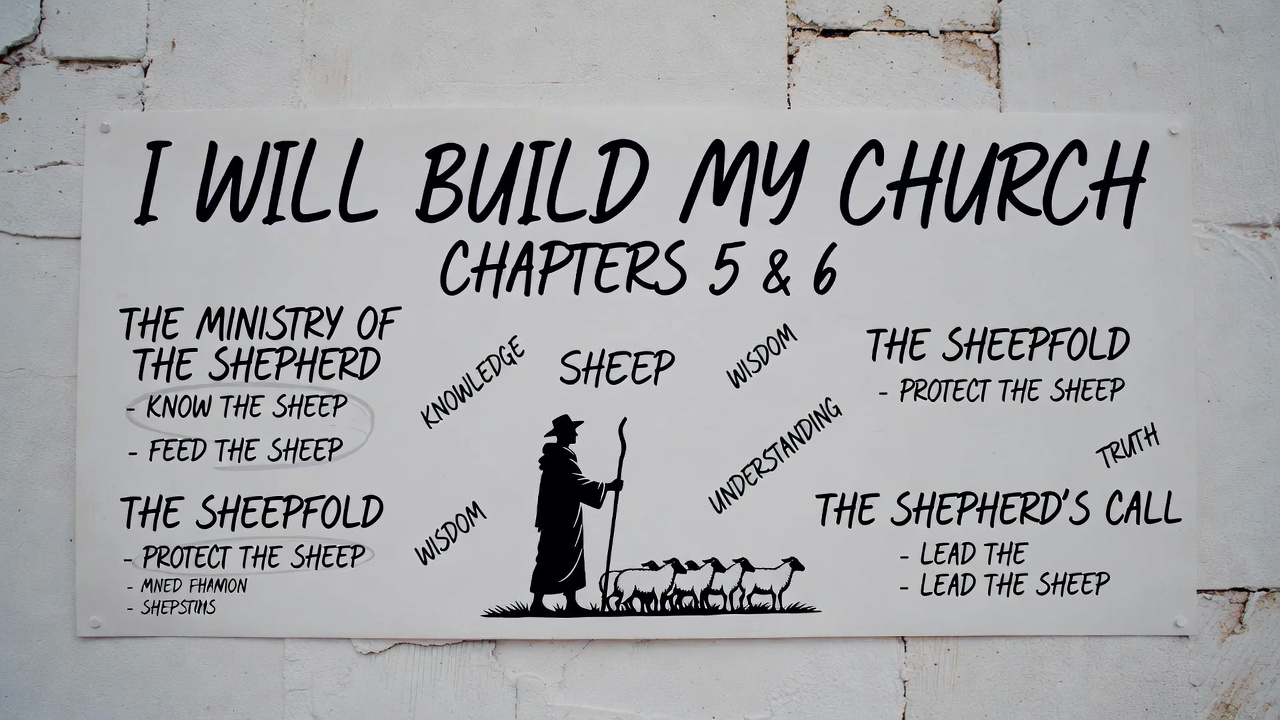
The meeting of Grace Christian Church. We meet in person and stream services every Sunday at 10:30 AM EST in Manalapan, New Jersey.
Summary of Chapter 5: Key Truths About MinistryThis chapter outlines foundational principles for effective, Christ-centered ministry, emphasizing dependence on God over self-effort. Key points include:
- Discoverer vs. Creator: Ministers should discover God's pre-ordained works (Ephesians 2:10) rather than create their own plans or agendas. Creating leads to "vain labor" (Psalm 127:1); discovery involves aligning with God's Word, seeking His discernment, and setting aside personal ideas.
- Spiritual GPS: God provides moment-by-moment directions (John 14:6) rather than full plans, fostering faith, dependence, and humility. This prevents stealing God's glory and encourages ongoing listening to Him.
- Unity in Ministry: True unity arises naturally from personal transformation into Christ-likeness, not man-made principles. "Leaven" that destroys unity includes self-serving agendas, ministry flesh, immaturity, unforgiveness, and harboring offenses (Galatians 5:9). Disunity results in conflict, territorialism, division, and church downfall.
- Spiritual Vigilance: Leaders must be alert like shepherds scanning for wolves (1 Peter 5:8), asking God for discernment to expose Satan's work in themselves and the congregation. Any conflict can be an entry point for the enemy.
- Truths About Calling:
- Ministry is a holy and fearful calling (2 Timothy 1:9; Romans 12:1-2; Ephesians 6:5), requiring surrender of gifts and fear of independence from God.
- God prioritizes the heart over ability (Psalms 27:8, 26:2, 139:23-24), seeking moment-by-moment dependence, His will above personal plans, and a loving heart toward others.
- Ministry serves as a "potter's wheel" for personal transformation (2 Corinthians 3:18), where God uses it more to change the minister than others.
- Expectations must align with God's will (Luke 22:42); unrealistic ones should be "died to." Christ is faithful to build His church in His timing and way.
- Minister from Jesus' feet (Luke 10:41-42): Work from Christ's life and power, not own ability (like Mary vs. Martha).
- Avoid making ministry an idol or "other lover" (1 John 5:21; Exodus 20:3), which leads to frustration and burnout.
- No life or identity in ministry (John 14:6); find value, worth, acceptance, and confidence in Christ alone (Philippians 4:19).
- All ministers truly offer is Christ in them (Colossians 1:27; Galatians 4:19), flowing through dependence to impact and transform lives.
Questions throughout encourage self-reflection on consequences of misalignment.Summary of Chapter 6: Shepherding The SheepThis chapter contrasts "rancher" and "shepherd" approaches to leadership, urging ministers to embody Christ's shepherding heart for individual care over institutional growth. Key points include:
- Shepherd vs. Rancher: God calls leaders to be shepherds (John 21:17; Matthew 18:12), not ranchers. Ranchers create rigid "boxes" for ministry, enforce "our way or else," prioritize numerical growth over spiritual well-being, assume they know best, and avoid personal involvement with hurting sheep.
- Characteristics of a Shepherd (1 Peter 5:1-2):
- Availability: Be on guard for the flock God purchased with His blood (Acts 20:28); make time to tend sheep personally.
- Heart of a Shepherd: Compassionate, caring, sensitive, discerning, interceding, vigilant, and protective (Matthew 9:36). Focus on what God prioritizes in sheep care.
- Sheep Over System: Prioritize spiritual growth over church "systems" focused on numbers (John 21:15; Revelation 2:5). When systems take precedence, the "lampstand" (church's light) risks removal.
- Concern for "The One": Like the parable of the lost sheep, pursue even one straying individual (Matthew 18:12), emphasizing personal value.
- Selfless and Sacrificial: Lay down life for the sheep (John 10:11), putting their needs above personal comfort.
- Results of Shepherding:
- Sheep experience Christ's love, care, and concern.
- Intentional pursuit of flock's needs and struggles.
- Prioritizing flock over self.
- Personal equipping and ministering "Life" to sheep.
- Spiritual vigilance for protection.
- Creating a Christ-centered environment via the Spirit.