
The meeting of Grace Christian Church. We meet in person and stream services every Sunday at 10:30 AM EST in Manalapan, New Jersey.
The Condition of Your Soul Before Transformation
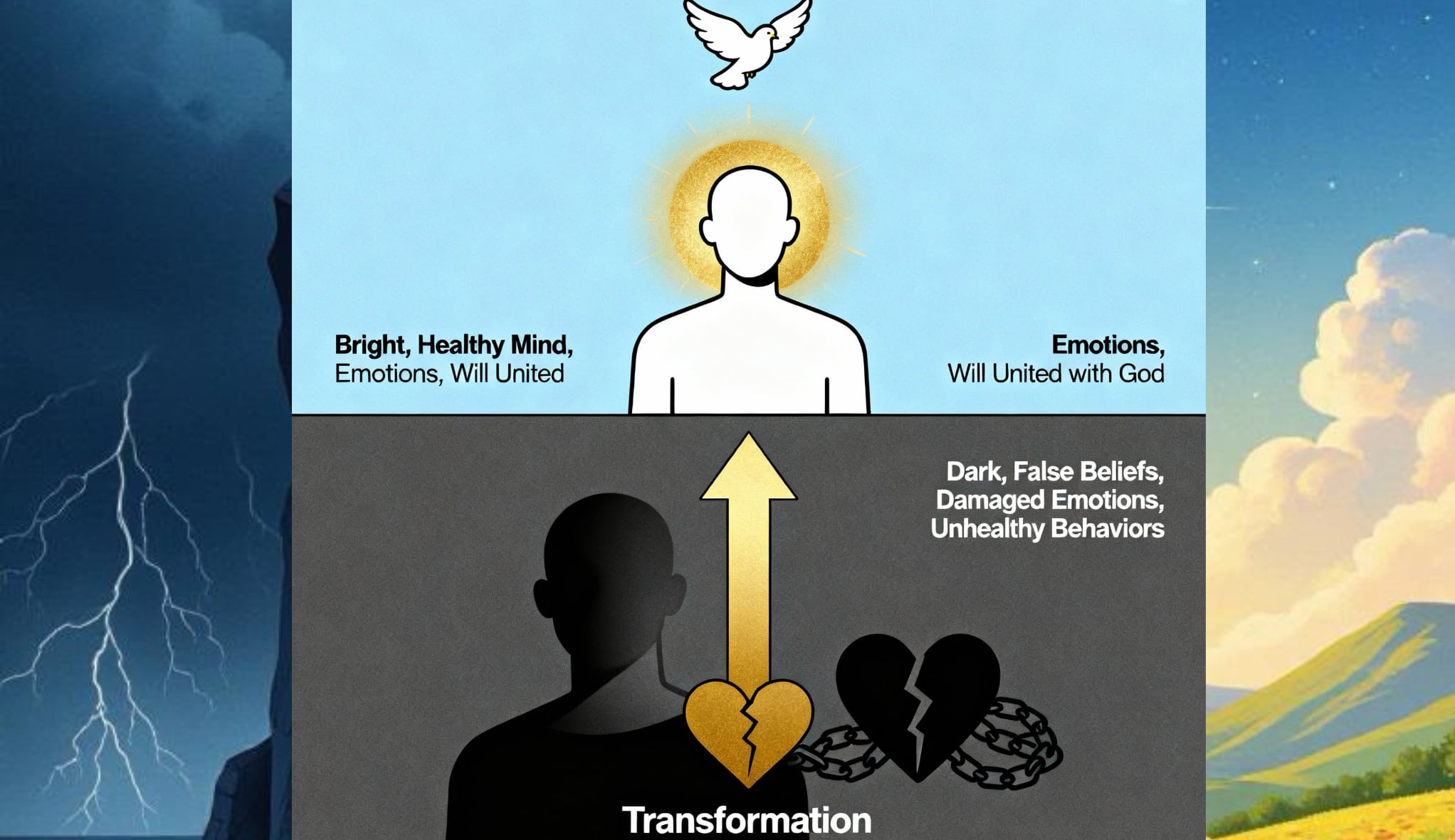
This lesson examines the state of the human soul (comprising the mind, emotions, and will) prior to spiritual transformation, emphasizing why transformation is essential to align with one's true identity in Christ. It contrasts the renewed human spirit (received at salvation) with the untransformed soul, which remains influenced by false beliefs, leading to damaged emotions and fleshly behaviors. Using diagrams like the "line analogy" (spirit above the line, soul below), the lesson explains how false beliefs create a cycle of negative impacts. It introduces the process of soul transformation, starting with renewing the mind through taking thoughts captive, and highlights tools for discernment. The lesson is structured over five days, with exercises, meditations, and questions to encourage personal reflection on how unaddressed soul issues hinder experiencing Christ-likeness.
Key Points
- Condition of the Soul Before Salvation/Transformation:
- Mind: Believes false beliefs about oneself, formed from past messages interpreted through Adamic DNA.
- Emotions: Tied to positive or negative false beliefs, becoming "damaged" (e.g., fear, anger, pride, depression). Emotions act like a swing, oscillating between positive and negative, but damaged ones reinforce false identities.
- Will: Makes choices based on false beliefs and damaged emotions, leading to fleshly behaviors (e.g., unforgiving, controlling, judgmental).
- Overflow: Fleshly behaviors create "death" (misery) in the soul, as per Romans 8:6.
- Emotions in Depth:
- Emotions are God-given indicators of inner states, like a barometer.
- Jesus experienced emotions (e.g., grief, anger, astonishment) to empathize with human struggles (Hebrews 4:15).
- "I feel" reinforces "I am" in a vicious cycle; unhealed damaged emotions perpetuate false beliefs.
- Examples of damaged emotions from negative beliefs: hopeless, rejected, anxious; from positive beliefs: pride, demanding, insensitive.
- The Will and Overflow:
- Choices stem from beliefs and feelings; without renewal, they result in ongoing fleshly behaviors.
- Lists common fleshly behaviors (e.g., self-pity, manipulative, impatient) and encourages reflection on their negative impacts on self and relationships.
- The Line Analogy:
- Above the line: Human spirit in union with God, housing true identity (e.g., righteous, secure, joyful).
- Below the line: Soul needing transformation, dominated by false beliefs, damaged emotions, and fleshly choices.
- After transformation begins: Mind renewed, emotions healed, will chooses true identity, leading to Christ-like behaviors.
- Transformation Process:
- Begins with renewing the mind (Romans 12:2), distinguishing it from the brain (storage) vs. mind (evaluator).
- Key step: Taking every thought captive (2 Corinthians 10:5), relying on the Holy Spirit's power.
- Three Spiritual Filters for Thoughts:
- God's Word: Discerns and evaluates thoughts (Hebrews 4:12).
- Mind of Christ: Provides constant access to wisdom, discernment, understanding, and revelation (1 Corinthians 2:16).
- Holy Spirit: Teaches, reminds, and evaluates thoughts (John 14:26).
- Practical Insights:
- Average 30,000–50,000 thoughts per day; 80% negative, 95% repetitive—necessitating intentional filtering.
- Consequences of not filtering: Ownership of false thoughts leads to temptation, sin, reinforced false beliefs, and strongholds.
- Exercises: Identify damaged emotions, fleshly behaviors, and consequences; meditate on scriptures; engage God for revelation.
- Discussion Questions:
- Focus on personal impact of truths learned, emotions, fleshly behaviors, importance of thinking about thoughts, and the role of spiritual filters.